

In fitness and weight loss circles, people often talk about body composition. But what is body composition and why does it matter? If you’re trying to lose weight and especially if you are a woman over the age of 40, the answers may hold the key to long-term weight loss and weight maintenance.
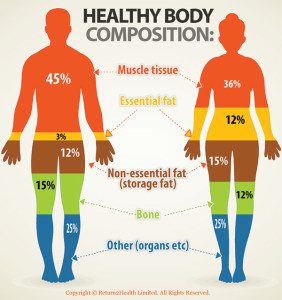
In physical fitness, body composition is used to describe the percentages of fat, bone, water and muscle in human bodies. Because muscular tissue takes up less space in our body than fat tissue, our body composition, as well as our weight, determines leanness. Body composition is the body’s relative amount of fat to fat-free mass. Those with optimal body composition are typically healthier, move more easily and efficiently, and in general, feel better than those with less-than-ideal body composition. If you can achieve a better body composition goes a long way toward improving your quality of life and overall wellness.
Body composition is divided into two separate types of mass: fat-free mass — which is comprised of all of the body’s non-fat tissues — and body fat.
Body fat includes essential fats, such as lipids, and nonessential body fats; these fats make up around five percent of total body weight for men, and up to 12 percent for women. Nonessential fat is found mainly within fat cells and adipose tissue, below the skin and surrounding major organs. The amount of nonessential fat stored in the body is variable among individuals on factors such as age, gender, and diet. Excess nonessential fat can normally be attributed to consuming more food energy than what is burned through metabolic functions and activity.
Body fat percentage is the percentage of total body weight that is comprised of fat.
Weighing yourself on a regular bathroom scale does not truly assess your body composition, because a regular scale cannot tell the difference between how much of your total weight is comprised of water, fat, or muscle.

Why Does Body Composition Matter for Weight Loss?
A body with more muscle and less fat is a more efficient calorie-burning machine. But you don’t have to be a body builder to reap the benefits
- A lean, strong body is a
 more efficient exerciser. As you become more fit, you are more capable of completing high intensity workouts that burn more calories and create greater improvements in the look and feel of your body.
 - Muscles burn more calories than fat. A lean, strong version of your body will burn more calories and have a better metabolism than the version of your body with more fat.
- Studies have shown that particularly in peri-and post menopausal women those who maintain a very physically active lifestyle tend to gain less weight than those who don’t.
- For aging women in particular, gaining more muscle and maintaining a good body composition is a great way to keep a lean physique and fit shape.

How Do I Change My Body Composition?

The good thing about body composition is that it is possible to change it to improve the way that you look and feel. To change your body composition, you need to eat a healthy diet that is low in fat and contains enough protein to build and maintain muscle.
A well-balanced exercise plan is essential as well. A good training program needs to include plenty of strength training to build muscle as well as high intensity aerobic activity,and moderate endurance cardio for burning fat. It’s also a good idea to do flexibility work to keep your muscles and joints healthy.
For many people, getting on the scale is difficult. But if you focus on body composition, the struggle can be a little bit more tolerable. Weight can fluctuate from day to day, but if you set a goal based on creating muscle and building a lean frame, you’ll ensure better results in the long run.
Source:
Image Source:
